Can Cats Eat Peanut Butter? Here’s What You Need to Know Before Sharing.
You’re sitting on the couch, enjoying a peanut butter sandwich, and your cat wanders over. They sniff the air, maybe even try to lick the plate. It’s a fair question—if dogs go nuts for the stuff, can cat eat peanut butter too?
The short answer is yes, technically, most cats can eat a tiny amount of peanut butter without immediate danger. But—and this is a big but—that doesn’t mean they should. In fact, most vets agree that peanut butter isn’t a good treat for your feline friend .
Let’s break down why, what the risks are, and what to do if your cat already stole a lick.
Is Peanut Butter Safe for Cats? Breaking Down the Basics.
You might be wondering, is peanut butter bad for cats or is it just not that good for them? The truth is a little of both.
Peanut butter itself isn’t toxic to cats. Plain peanuts, the main ingredient, aren’t poisonous to them . But the problem is what gets added to most peanut butters—and how a cat’s body handles it.
Cats are what experts call obligate carnivores. That’s a fancy way of saying their bodies are designed to run on meat. They need animal-based proteins to get nutrients like taurine, which they can’t get from plants . So when you feed them something like peanut butter, which is packed with plant-based fats and proteins, their digestive system isn’t really sure what to do with it.
Can Cats Have Peanut Butter With Added Ingredients?
This is where things get tricky. Even if you assume plain peanuts are okay, most store-bought peanut butter isn’t just peanuts. It usually contains:
- Added salt
- Sugar or sweeteners
- Oils and preservatives
- In some cases, xylitol (an artificial sweetener)
These extras are what turn a questionable snack into a risky one.
The Real Risks: Why Most Vets Say Skip It.
If you’ve been asking yourself is peanut butter toxic to cats, the answer depends on what’s in the jar. But even without toxic ingredients, there are real health concerns.
Xylitol: The Hidden Danger.
Let’s start with the scariest one. Xylitol is an artificial sweetener found in some “sugar-free” or “low-carb” peanut butters. In dogs, it’s extremely toxic. In cats, the research is a little less clear—some studies suggest cats aren’t as sensitive to it—but most vets still say avoid it entirely .
Why take the risk? If xylitol is present, it can cause a dangerous drop in blood sugar and potential liver damage . Always, always check the label.
Choking Hazard.
Ever tried to swallow a spoonful of sticky peanut butter without water? It’s thick and clings to the roof of your mouth. Now imagine that in a tiny cat throat.
The sticky texture can be a real choking hazard for cats. They might lick it and find it stuck, making it hard to swallow or even breathe .
Digestive Upset and Allergies.
Even if your cat manages to swallow it safely, their stomach might rebel. Since cats aren’t built to process high-fat plant foods, peanut butter can cause:
- Vomiting
- Diarrhea
- Stomach pain or gas
And yes, cats peanut butter allergies are possible too. If it’s their first time trying it, watch for itching, skin irritation, or digestive issues .
Weight Gain and Long-Term Health.
Peanut butter contains a lot of calories and fat. For a small animal like a cat, even a little bit adds up fast. Regularly feeding it can lead to weight gain, which increases the risk of diabetes, pancreatitis, and joint problems .
Do Cats Like Peanut Butter? (And Does It Matter?)
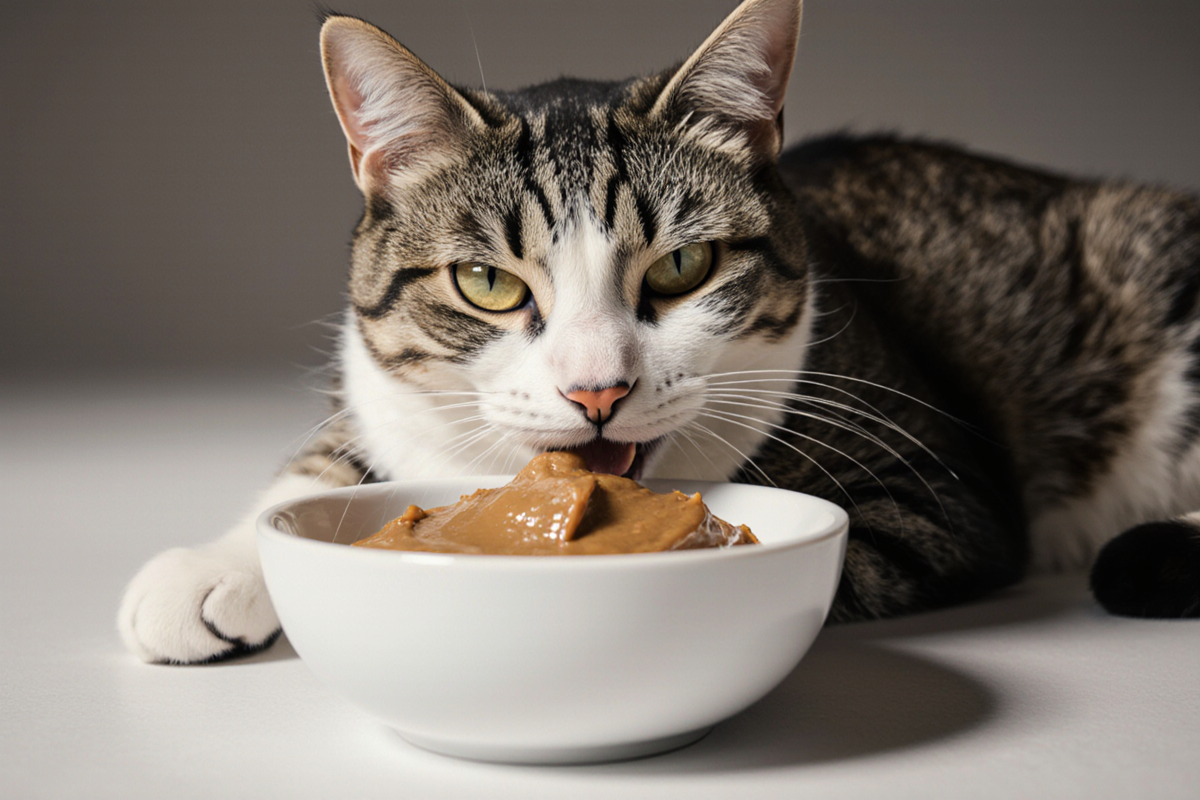
It’s a fair question: do cats like peanut butter? Some do, some don’t.
Cats are picky eaters by nature. Unlike dogs, who often eat anything that smells like food, cats tend to be more cautious. Interestingly, cats don’t have taste receptors for sweetness, so they’re not drawn to sugary flavors the way we are .
If your cat likes peanut butter, it’s probably because of the fat or salt content, or just the novelty of licking something creamy off a spoon. But just because they like it doesn’t mean it’s good for them—my cat would eat cheese fries if I let her, but that doesn’t make it a balanced meal.
Can Cats Eat Peanuts Instead of Peanut Butter?
You might think, well, what about the source material? Can cats eat peanuts if they’re plain and unsalted?
Plain, raw, unsalted peanuts are less risky than peanut butter, but they’re still not a great choice . Here’s why:
| Peanut Form | Main Risks | Verdict |
| Plain peanuts (shelled) | High fat, choking hazard, no nutritional value | Occasional tiny piece is okay, but not recommended |
| Peanuts in shell | Severe choking risk, intestinal blockage | Avoid completely |
| Salted/flavored peanuts | Salt toxicity, spices that upset stomach | Avoid |
| Peanut butter (no xylitol) | Sticky texture, fat, sugar/salt, empty calories | Tiny amount occasionally, but better to skip |
| Peanut butter with xylitol | Potentially fatal | Emergency—call vet immediately |
So while can cats eat peanuts might have a “technically yes” answer, it comes with a long list of warnings. They’re calorie-dense and offer zero nutritional benefits that your cat isn’t already getting from their regular food .
What About Cats and Peanut Butter for Pills?
One common reason people ask can cats have peanut butter is to hide medication. It’s true—some pet parents use it to disguise pills.
If you decide on this option, be extra cautious. Use the tiniest dab possible—just enough to coat the pill. Make absolutely sure the peanut butter has no xylitol, no added sugar, and low salt . And don’t do it every day. There are also pill pockets made specifically for cats that work just as well without the risks.
My Cat Has Eaten Peanut Butter—Now What?
Accidents happen. If your cat snagged a lick of peanut butter off your plate, here’s your game plan:
- Check the label. Look for xylitol first. If it’s there, call your vet or the Pet Poison Helpline immediately .
- If no xylitol, don’t panic.Keep an eye on your cat for a few hours.
- Look for signs of upset: vomiting, diarrhea, lethargy, or coughing (if they choked).
- Call your vet if anything seems off, even if you’re unsure.
Most healthy cats will be fine after a small taste of regular peanut butter. However, it’s always wiser to stay cautious.
Healthier Alternatives to Peanut Butter.
If you want to give your cat a special treat, there are much better options out there. Cats are meat-eaters, so they’ll appreciate these way more than peanuts anyway.
- Small pieces of cooked chicken or turkey (no seasoning, no skin)
- Freeze-dried meat treats (pure meat, nothing else)
- A bit of cooked fish like salmon or tuna (in water, not oil)
- Commercial cat treats made for feline nutrition
- Catnip or cat grass as a non-food form of enrichment
These options are safer, easier to digest, and actually contain nutrients your cat can use.
So, Should You Feed Your Cat Peanut Butter?
Here’s the bottom line on can cat eat peanut butter:
- Technically yes, a tiny amount without xylitol is unlikely to hurt a healthy cat.
- Practically no, because it offers zero nutritional value and comes with real risks like choking, digestive upset, and long-term weight gain.
Your cat isn’t missing out on anything by skipping the peanut butter. They’re much better off with a small piece of chicken or a fish-flavored treat designed for their needs.
If you’re still unsure, ask your vet. They know your cat’s health history and can give you personalized advice. But for most cats, the safest answer is to keep the peanut butter for yourself and offer your furry friend something that actually supports their carnivore lifestyle.