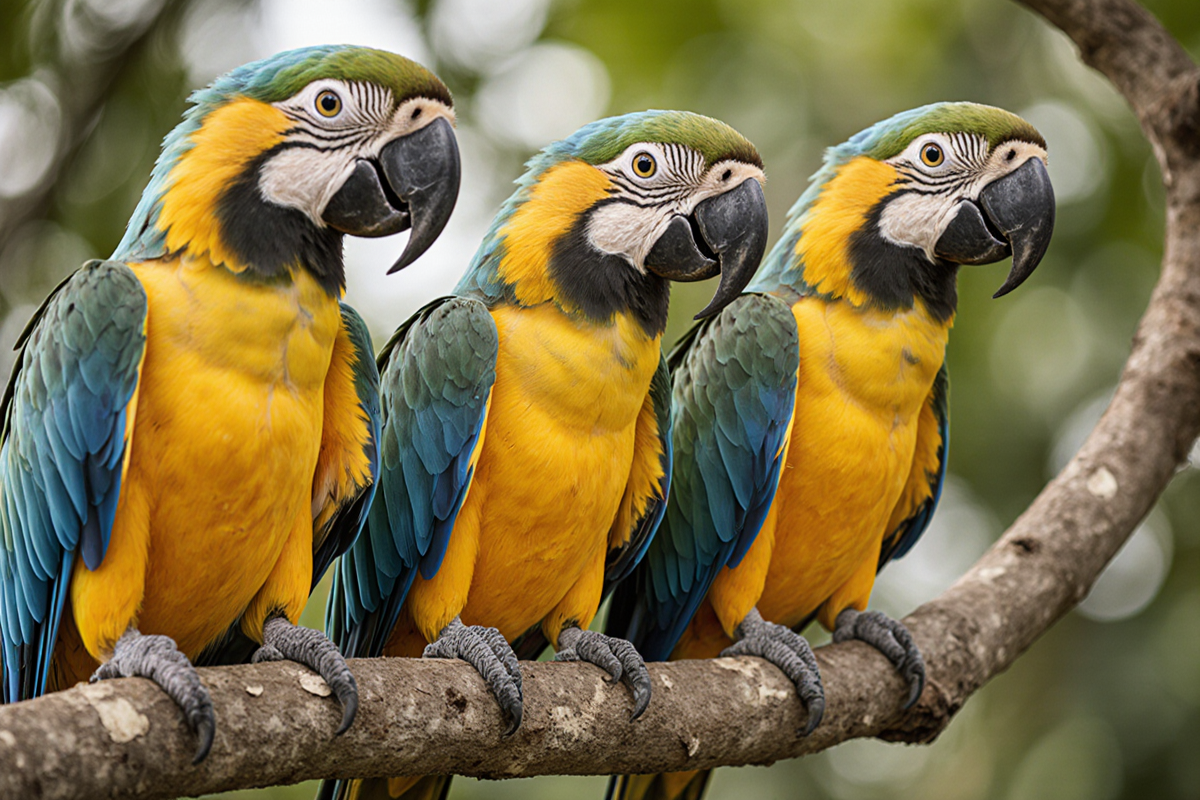
Best Talking Birds for Pets: Top 10 Feathered Friends That Can Actually Talk
For centuries, talking birds have fascinated humans with their ability to copy human speech. In my opinion, bringing a talking bird into your home is not just about owning a pet—it’s about welcoming a smart, interactive, and sometimes hilarious companion into your daily life. I’ve seen many people choose a bird only because it “talks a lot,” but the truth is that the best talking bird is the one that fits your lifestyle, time, and patience level.
This guide will help you understand what makes a bird a good talker, explore the top 10 talking birds for pets, and choose the right feathered chatterbox for your home.
What Makes a Bird a Good Talker?
Not all birds are natural talkers. In my experience, birds that are highly social and intelligent tend to learn human speech more easily. Most talking birds belong to the parrot or parakeet family because they use complex vocal communication in the wild.
Key factors that affect talking ability include:
- High intelligence.
- Strong bonding with humans.
- Daily interaction and repetition.
- Calm, stress-free environment.
It’s also important to remember that individual personality matters. Even within the same species, one bird may talk a lot while another may stay mostly quiet.
Top 10 Talking Birds That Make Amazing Pets
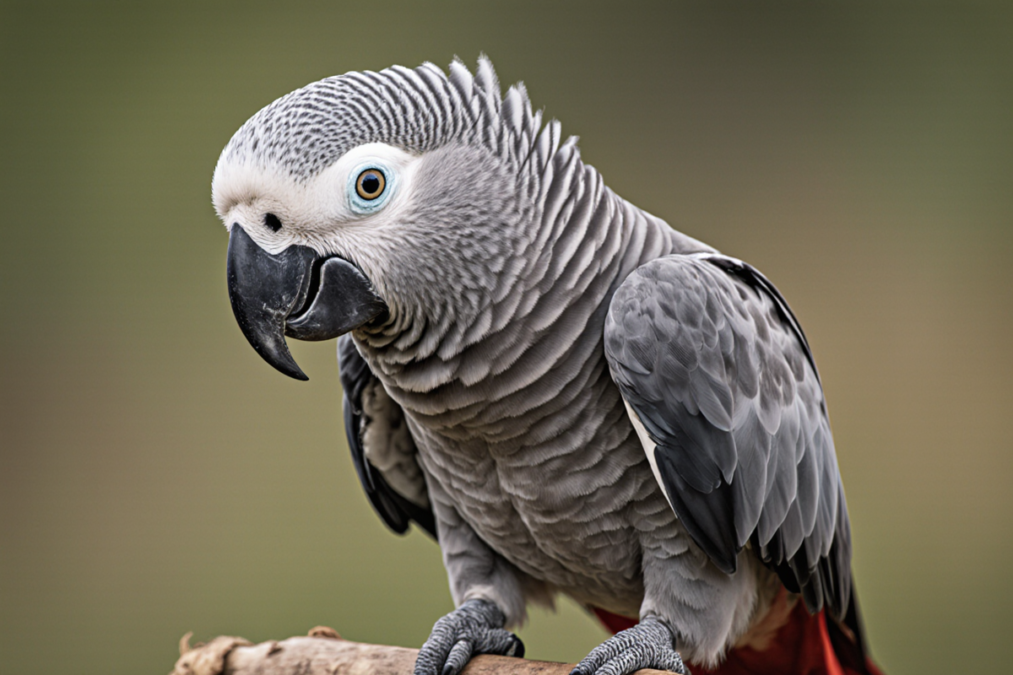
1. African Grey Parrot
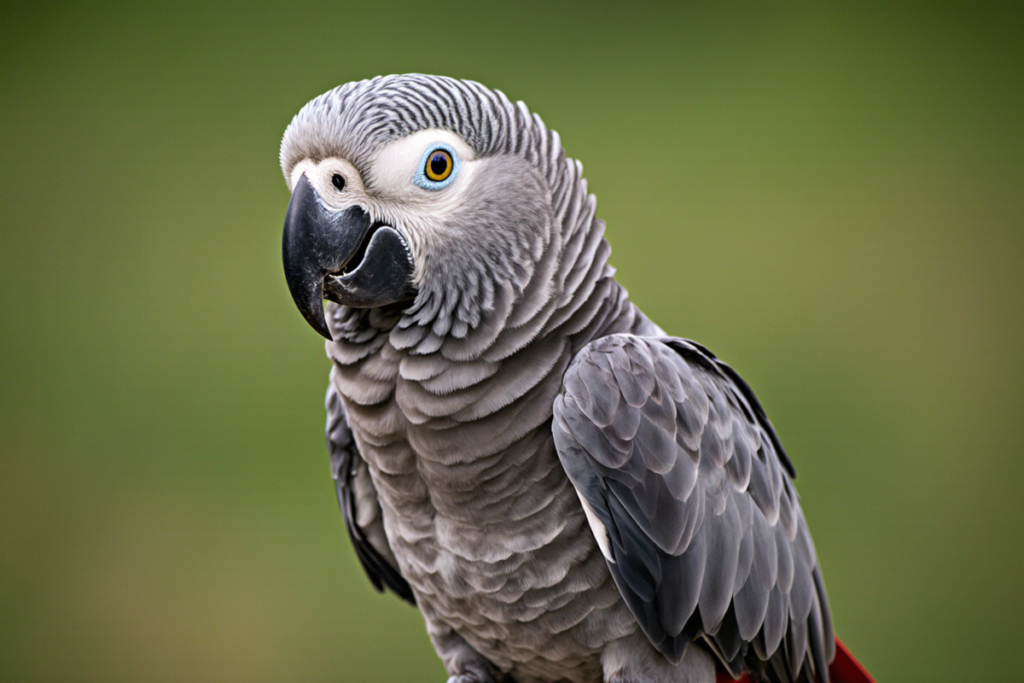
Often considered the smartest talking bird in the world, the African Grey doesn’t just repeat words—it understands context.
- Talking Ability: Exceptional. Vast vocabulary, uncanny clarity, and a deep understanding of meaning.
- Personality: Highly intelligent, sensitive, and observant. Prone to stress if bored.
- Lifespan: 40-60 years.
- Color & Appearance: Primarily sleek, silvery grey. The Congo African Grey has a bright red tail and black beak. The smaller Timneh African Grey has a darker charcoal body, a maroon tail, and a horn-colored upper mandible.
Pros:
- Unmatched speech and intelligence
- Forms deep bonds with owners
- Very clear, human-like voice
Cons:
- Needs constant mental stimulation
- Can develop stress behaviors if neglected
- Long-term commitment and expensive care
2. Amazon Parrot
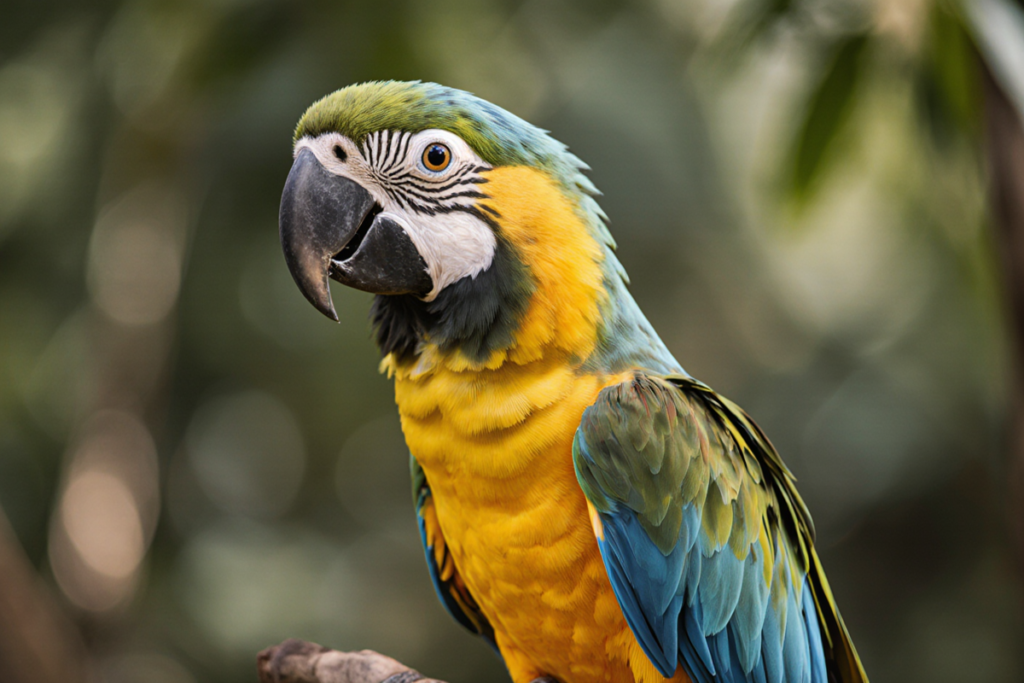
Amazon parrots are bold, loud, and full of personality. Many bird lovers proudly call them the true performers of the parrot world.
- Talking Ability: Excellent. Known for loud, clear speech and a love for singing.
- Personality: Confident, outgoing, clownish, but can become hormonally territorial.
- Lifespan: 40-60 years.
- Color & Appearance: Predominantly bright green with bold, species-specific markings on the head, wings, and tail. Examples include the Yellow-headed (vivid yellow head), Blue-fronted (bright blue forehead), and vibrant Orange-winged Amazon.
Pros:
- Strong, clear speech
- Loves singing and interaction
- Generally healthy birds
Cons:
- Can be noisy
- Hormonal aggression during adolescence
- Needs firm training
3. Eclectus Parrot
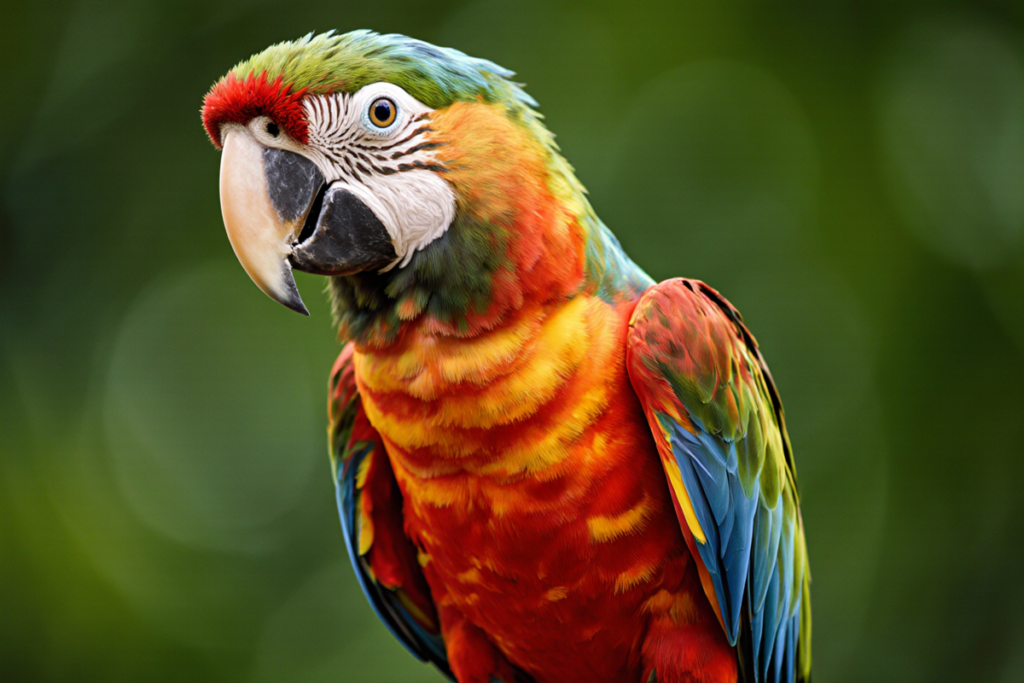
Known for their stunning colors and calm nature, male Eclectus parrots are especially good talkers.
- Talking Ability: Very Good to Excellent. Males are often more prolific talkers with sweet, clear voices.
- Personality: Gentle, quiet (for a parrot), and observant. They have unique dietary needs and a calm demeanor.
- Lifespan: 30-50 years.
- Color & Appearance: Striking sexual dimorphism. Males are brilliant emerald green with red and blue underwing flashes and an orange/yellow beak. Females are deep crimson and purple with a black beak.
Pros:
- Clear and sweet voice
- Less screaming compared to other parrots
Beautiful appearance
Cons:
- Sensitive digestive system
- Requires a strict diet
- Can stress easily
4. Indian Ringneck Parakeet
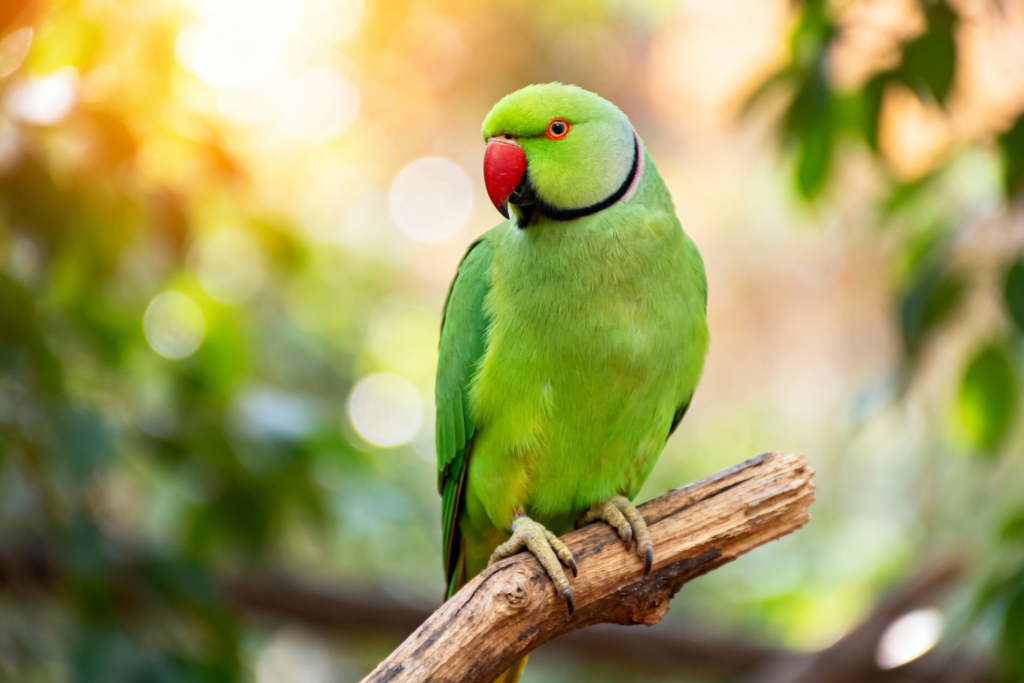
One of the best talking birds for beginners with some experience, Indian Ringnecks are famous for their clear pronunciation.
- Talking Ability: Excellent. Known for a large vocabulary with remarkable clarity.
- Personality: Active, intelligent, and independent. Can be nippy if not properly socialized.
- Lifespan: 25-30 years.
- Color & Appearance: Slender body with a long, tapered tail. Natural color is bright lime green. Males develop a distinctive black and rose neck ring. Many stunning color mutations exist, including blue, yellow, albino, and grey.
Pros:
- Amazing clarity
- Large vocabulary potential
- Medium size, easier to manage
Cons:
- Can be nippy if not socialized
- Needs daily handling
- High-pitched natural calls
5. Quaker Parrot (Monk Parakeet)
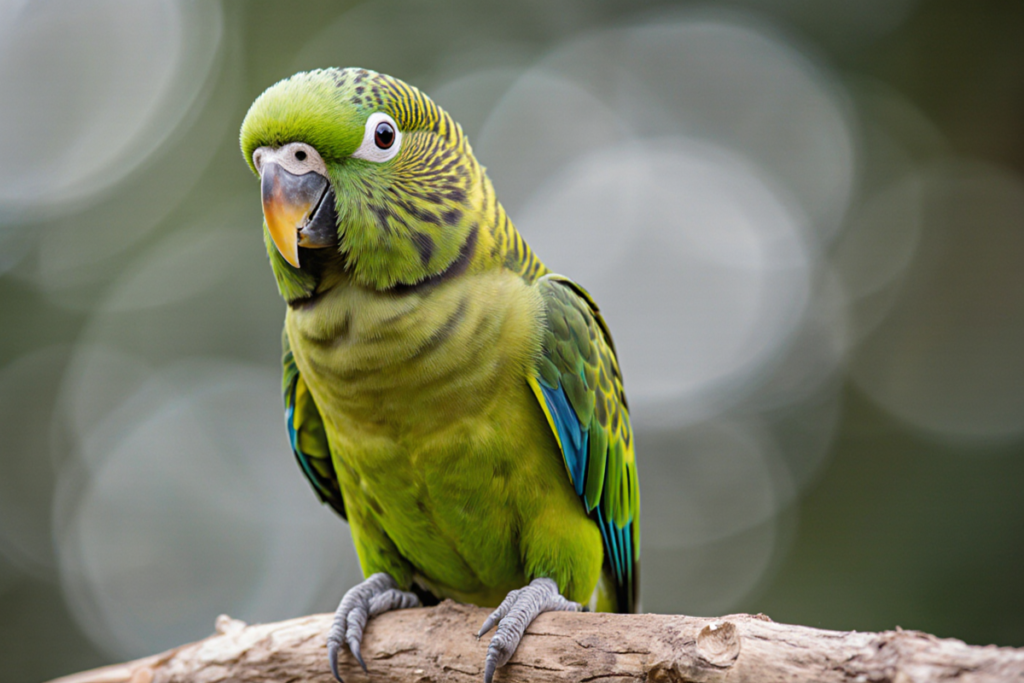
Small but full of confidence, Quakers are impressive talkers for their size.
- Talking Ability: Very Good. Picks up words and phrases quickly, often in a cute, gravelly voice.
- Personality: Feisty, social, playful, and famously skilled at building complex nests.
- Lifespan: 20-30 years.
- Color & Appearance: Bright green head, back, and wings with a soft grey face, chest, and throat. They have a scalloped appearance and blue flight feathers. Mutations include blue, cinnamon, and albino.
Pros:
- Fast learners
- Affordable compared to large parrots
- Fun, energetic personality
Cons:
- Territorial behavior
- Illegal in some regions
- Naturally noisy
6. Budgerigar (Budgie)
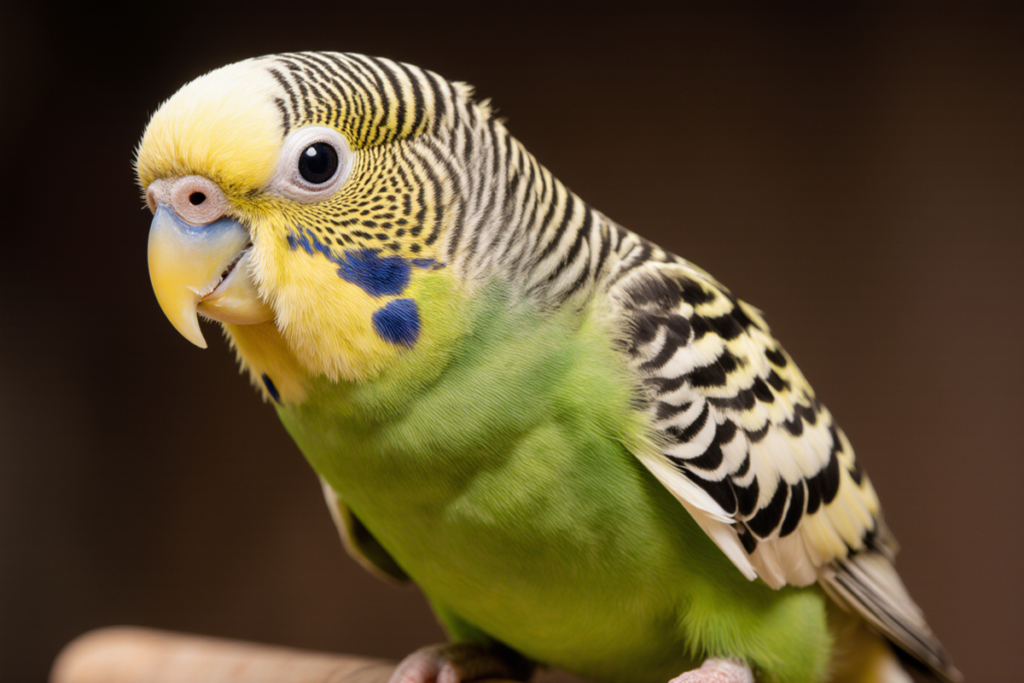
In my opinion, the budgie offers the best value-for-money talking ability of any bird.
- Talking Ability: Good to Very Good. Males are the best talkers, capable of learning hundreds of words with clear, though often fast, diction.
- Personality: Social, active, cheerful, and easily tamed. Perfect for first-time owners.
- Lifespan: 7-15 years.
- Color & Appearance: Small and slender. Wild type is yellow and green with black scalloped markings. Captive breeding has created a vast array of colors: blues, whites, greys, violets, and yellows, with various patterns like pied, spangle, and opaline.
Pros:
- Affordable and beginner-friendly
- Can learn hundreds of words
- Ideal for apartments
Cons:
- Small voice
- Fragile body
- Pairing may reduce talking focus
7. Cockatiel
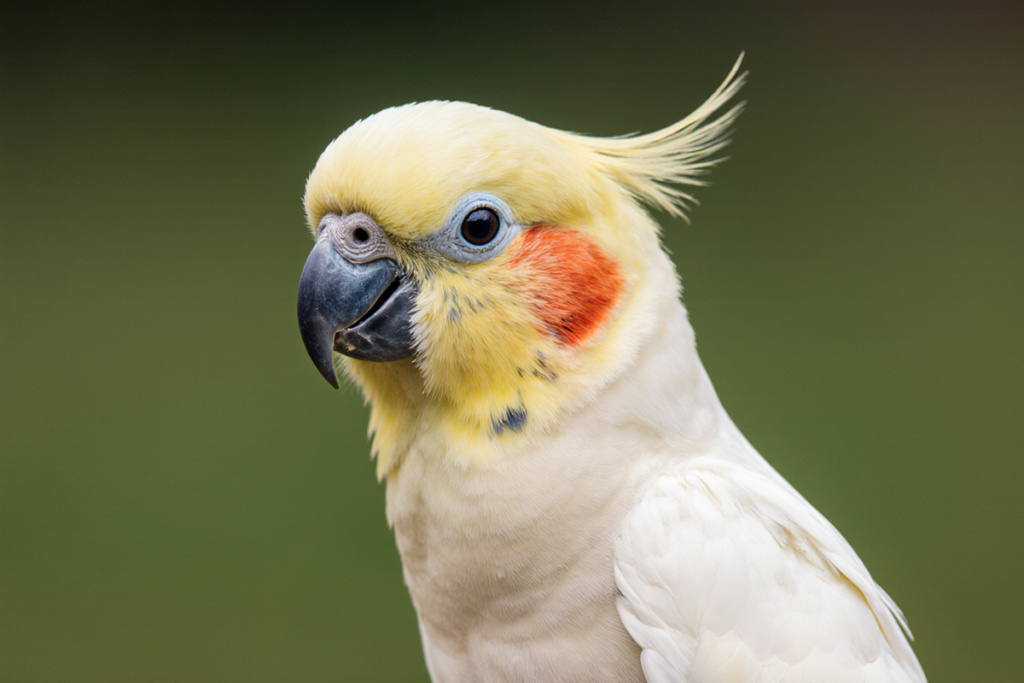
Cockatiels are better whistlers than talkers, but they still make wonderful pets.
- Talking Ability: Fair. More likely to be champion whistlers, but can learn simple phrases and words.
- Personality: Sweet-natured, affectionate, cuddly, and relatively quiet. An ideal beginner bird.
- Lifespan: 15-25 years.
- Color & Appearance: Smaller cockatoo relatives with a distinctive head crest. The “Normal Grey” has a grey body, yellow face, and orange cheek patches. Popular mutations include Lutino (solid yellow with red eyes), Pied, Pearl, and Cinnamon.
Pros:
- Very friendly and calm
- Great for beginners
- Less noise
Cons:
- Limited vocabulary
- Produces feather dust
- Can become clingy
8. Cockatoo
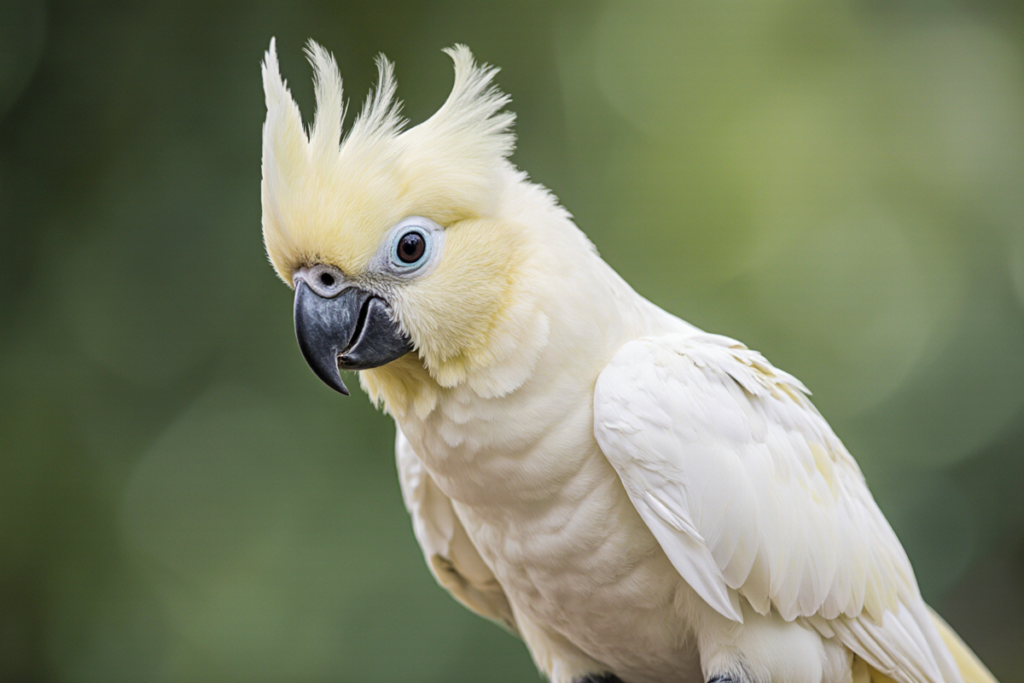
Cockatoos are emotional, affectionate, and extremely demanding.
- Talking Ability: Good. Can learn words, but are often better at mimicking sounds, whistles, and household noises.
- Personality: Extremely affectionate, emotionally demanding, and prone to severe separation anxiety. Require constant interaction.
- Lifespan: 40-70+ years.
- Color & Appearance: Known for their dramatic, mobile crests. Most are predominantly white (e.g., Umbrella, Goffin’s) or off-white (e.g., Sulphur-crested). Some, like the Moluccan, have a stunning peach-colored body and salmon-pink crest.
Pros:
- Highly intelligent
- Loves physical affection
- Very playful
Cons:
- Extremely loud
- Destructive if bored
- Requires constant attention
9. Derbyan Parakeet
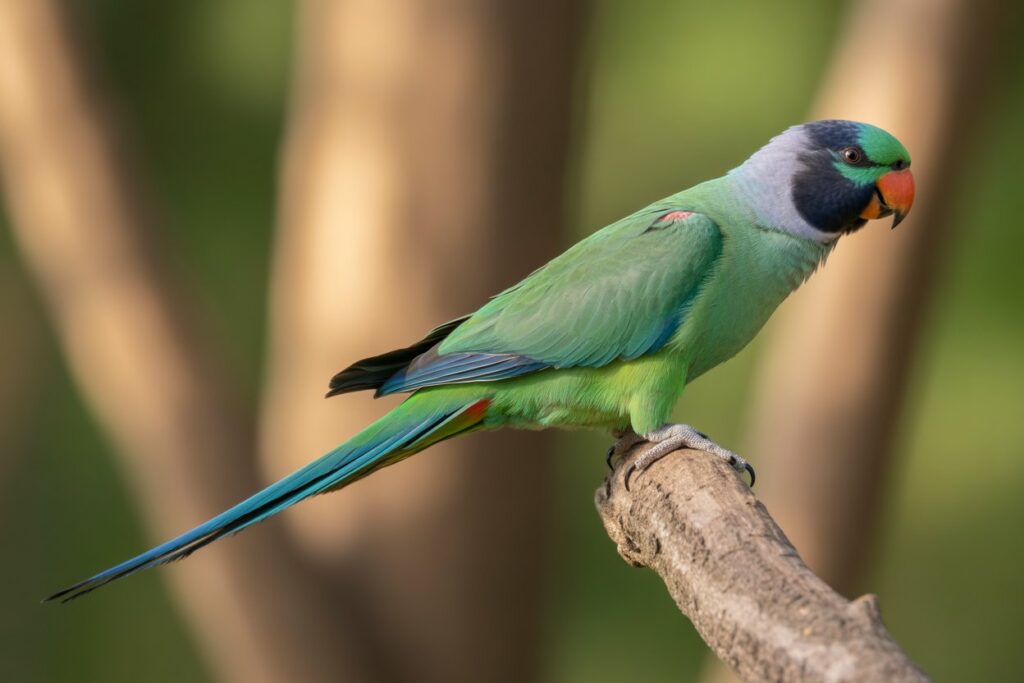
A lesser-known but excellent talking bird with a deep, clear voice.
- Talking Ability: Very Good. Known for exceptional clarity and a love for learning words and sounds.
- Personality: Intelligent, playful, but often with a calmer disposition than the Indian Ringneck.
- Lifespan: 20-30 years.
- Color & Appearance: Larger than the Ringneck. Striking plumage with a lavender-grey head and body, green wings and tail, a black facial stripe, and a bright yellow lower beak. A truly beautiful and colorful bird.
Pros:
- Clear speech
- Beautiful plumage
- Less hyper behavior
Cons:
- Harder to find
- Can be expensive
- Needs social time
10. Hill Myna (Not a Parrot)
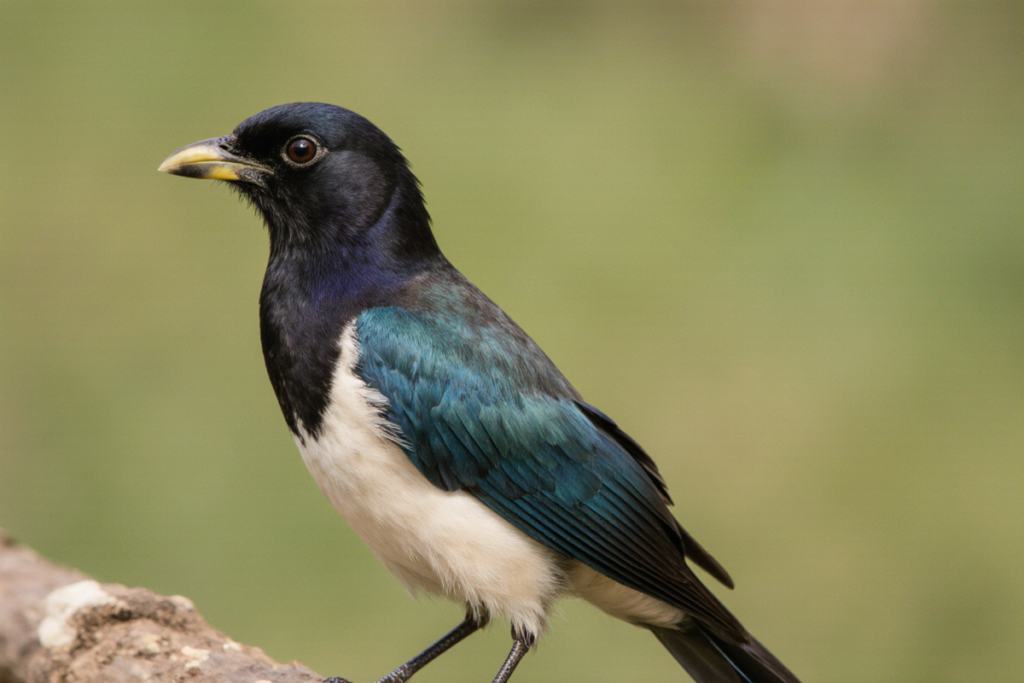
The Hill Myna is famous for human-like voice clarity.
- Talking Ability: Exceptional Clarity. Considered one of the best in the world for tonal accuracy and precision; often sounds like a recorded human voice.
- Personality: Less “cuddly” than parrots, more observational. Intelligent but messy eaters.
- Lifespan: 15-25 years.
- Color & Appearance: Glossy, jet-black plumage with bright yellow-orange wattles (skin patches) on the head and a distinctive yellow beak tip. They have white wing patches that are visible in flight.
Pros:
- Sounds almost human
- Unique pet choice
- Fascinating behavior
Cons:
- Messy eater
- Not affectionate
- Ethical sourcing can be difficult
How to Encourage Your Bird to Talk?
From what I’ve seen, birds that feel safe and bonded talk more confidently.
- Start training young
- Talk clearly and positively
- Repeat words in context
- Be patient and consistent
- Never force speech
Frequently Asked Questions (FAQs)
What is the best talking bird for beginners?
A male budgie is the best choice for beginners focused on talking. For a calmer companion, a cockatiel is ideal.
Which bird is easiest to teach to talk?
Budgies and Quaker parrots learn words quickly due to their social nature.
Do birds understand what they say?
Some birds, especially African Greys, understand context. Most others associate words with reactions.
Can female birds talk?
Yes. While males often talk more, many females learn speech very well.
What is the smartest talking bird?
The African Grey Parrot is widely considered the most intelligent talking bird.
Final Thoughts: Choosing the Right Talking Bird
Choosing a talking bird is a long-term commitment, not a quick decision. In my opinion, the happiest talking birds belong to owners who understand their emotional and mental needs—not just their ability to speak. With patience, love, and consistency, even a small bird can become an amazing conversational companion.
If you’re ready to take the next step, explore our guide on setting up the perfect bird cage and discover low-maintenance pet birds for busy households.